
Florida is a popular state for recreational vehicle (RV) enthusiasts. With its sunny weather and beautiful landscapes, many residents choose to explore the open road in their RVs. However, understanding the various types of RV insurance available in Florida is essential. Having the right coverage protects your investment and provides peace of mind during your travels.
Exploring Essential RV Insurance Options for Florida Residents
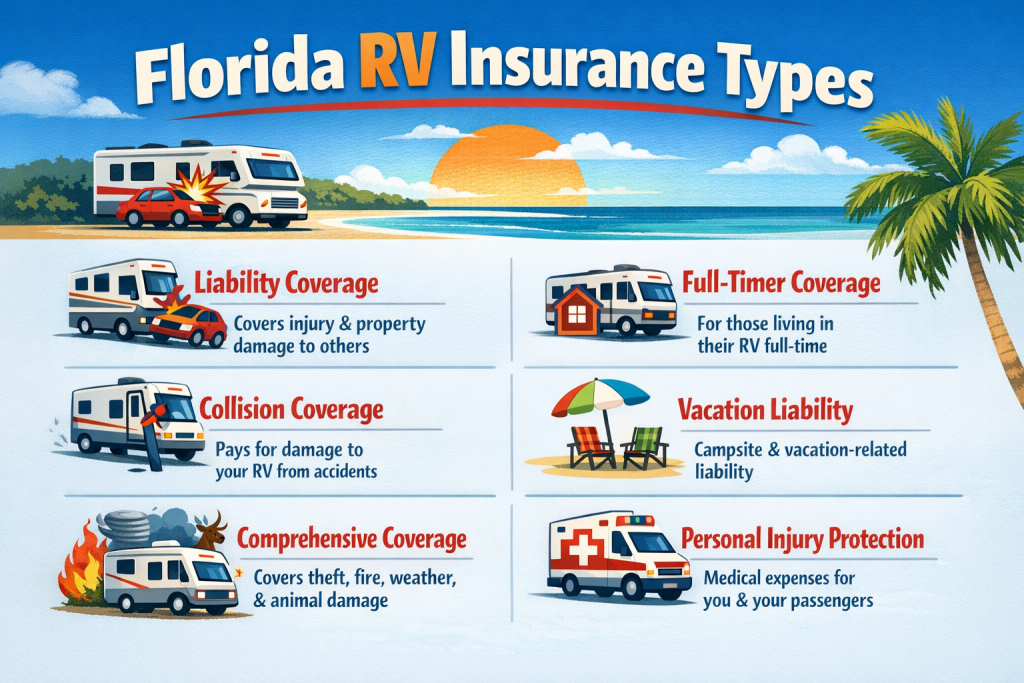
When looking for RV insurance in Florida, several types of coverage exist. Liability insurance is a fundamental option. It covers damages to other vehicles and property if you cause an accident. Additionally, it helps with medical expenses for injured parties. Having liability coverage is a legal requirement in many cases.
Comprehensive coverage is another popular choice among Florida RV owners. This type covers damages to your RV caused by non-collision events. For instance, it protects against theft, vandalism, and natural disasters. Florida’s unpredictable weather can lead to severe storms, making comprehensive coverage particularly beneficial.
Collision coverage offers protection when your RV collides with another vehicle or object. This insurance pays for the repairs needed to your RV regardless of fault. Ensuring you have collision coverage helps reduce financial stress after an accident. Many RV owners in Florida opt for a combination of these insurances to create a robust policy.
Key Factors to Consider When Choosing RV Insurance in Florida
Choosing the right RV insurance involves several important factors. First, consider the type and value of your RV. A high-value RV often requires more comprehensive insurance coverage. Furthermore, understanding how frequently you use your RV can impact your insurance needs. For instance, full-time RVers might require different coverage than occasional users.
Another essential factor is the driving history of the policyholder. Insurance companies often consider past accidents and claims when determining rates. A clean driving record can lead to lower premiums, while a history of accidents may result in higher costs. Consequently, keeping a good driving record is beneficial in securing affordable rates.
Lastly, shop around for various quotes. Different companies offer different rates and coverage options. Comparing quotes allows you to find the best deal that suits your requirements. Additionally, reading customer reviews can provide insights into the claims process and customer service quality. Taking the time to research leads to making an informed decision.
Conclusion
Understanding the types of RV insurance available in Florida is crucial for every RV owner. A combination of liability, comprehensive, and collision coverage can provide a well-rounded policy. Additionally, considering factors such as RV value, driving history, and shopping around can lead to significant savings. Each RV journey deserves the protection that quality insurance offers.