
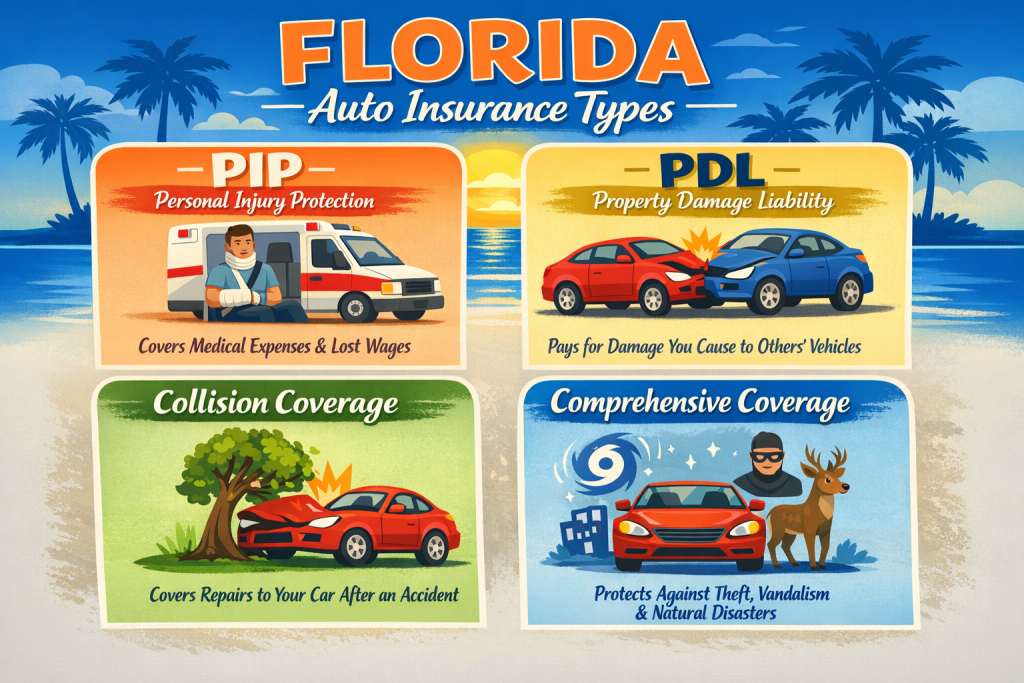
Understanding Types of Auto Insurance in Florida can feel overwhelming. Each type of coverage offers unique protections that suit various needs. By learning about these options, drivers can make informed decisions that fit their circumstances.
Exploring Florida's Basic Auto Insurance Coverage Options
Florida law requires drivers to carry a minimum level of auto insurance. Personal Injury Protection (PIP) and Property Damage Liability (PDL) are the two mandatory coverages. PIP covers medical expenses for you and your passengers, regardless of fault. Meanwhile, PDL pays for damages you cause to another person's property.
Often, drivers choose to exceed the minimum coverage to ensure better financial protection. Higher coverage limits can prevent significant out-of-pocket expenses in the event of an accident. Many opt for bodily injury liability, which protects against claims made by injured parties. This additional layer of security can provide peace of mind on the road.
Furthermore, uninsured/underinsured motorist coverage is another option to consider. This coverage steps in when involved in an accident with someone who lacks adequate insurance. Many drivers find this coverage essential since it helps safeguard against financial loss. As a result, understanding these basic coverage options creates a solid foundation for responsible driving in Florida.
Comprehensive and Collision Insurance: What You Need to Know about Types of Auto Insurance in Florida
Comprehensive and collision insurance add extra protection for vehicle owners. Collision coverage pays for damage to your car after an accident, regardless of fault. This option ensures that you can repair or replace your vehicle without facing high costs. Many drivers find it crucial, especially for newer or more valuable cars.
On the other hand, comprehensive coverage protects against non-collision-related incidents. These incidents can include theft, vandalism, or natural disasters. For instance, if a tree falls on your car during a storm, comprehensive coverage helps cover repair costs. Securing both types of coverage offers peace of mind in various circumstances.
Additionally, choosing between these options often depends on personal circumstances. For older vehicles, drivers may opt to skip comprehensive coverage to save money. However, noting the potential risks is essential before making such a decision. Assessing the value of your vehicle and your financial situation will guide you in selecting the best coverage options.
Conclusion
Understanding the different types of auto insurance in Florida is crucial for every driver. Mandatory coverages like PIP and PDL serve as a base, while optional choices like collision and comprehensive coverage enhance protection. By evaluating personal needs and vehicle value, drivers can make informed decisions that suit their lifestyles. Always consider potential risks and long-term financial implications.