
Understanding the types of health insurance in Florida can be quite overwhelming. Numerous options exist to cater to varying needs and budgets. Knowing each type will help individuals make informed decisions about their health care. This article aims to simplify the landscape of health insurance in Florida. It will cover key options and offer guidance on selecting the right plan.
Key Health Insurance Options Available in Florida Today
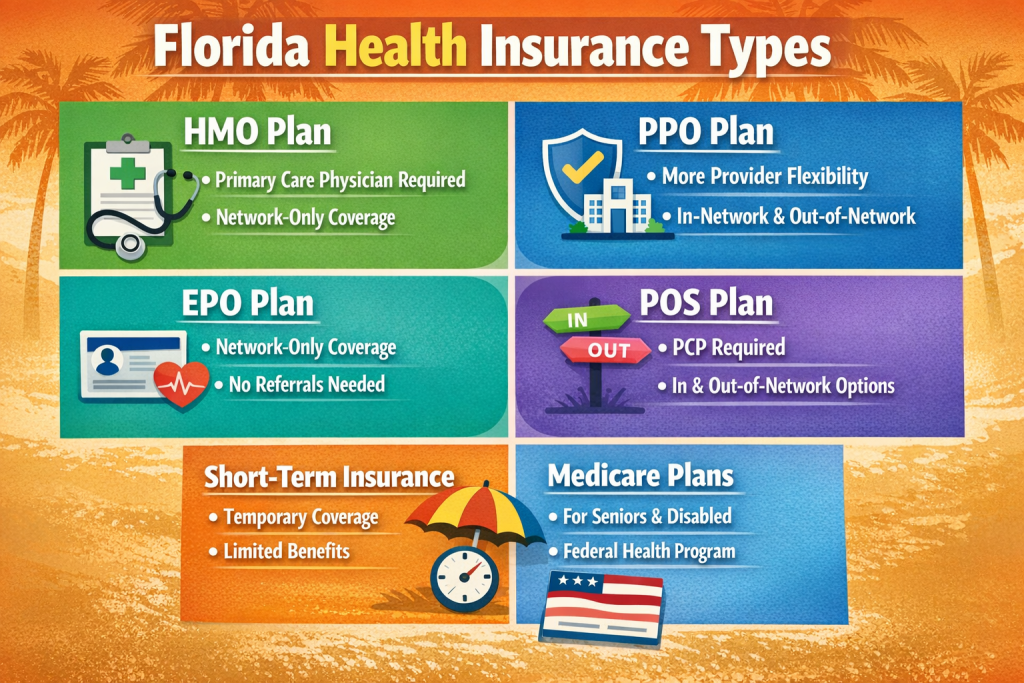
Florida offers a variety of types of health insurance in Florida and options that cater to diverse needs. One major option is the Health Maintenance Organization (HMO). HMO plans require members to select a primary care physician. Members must also obtain referrals for specialist visits. While these plans often come with lower premiums, they may limit choices for providers.
Another popular option is the Preferred Provider Organization (PPO). PPOs provide more flexibility when it comes to choosing healthcare providers. Members can see specialists without needing a referral. Although premiums tend to be higher for PPO plans, they allow for greater freedom in health care decisions.
Additionally, there are Exclusive Provider Organizations (EPOs). EPOs combine features of both HMOs and PPOs. They require members to use a network of doctors and hospitals, but do not require referrals. Generally, EPOs have lower premiums than PPOs, making them an attractive choice for those who value some flexibility while still wanting to save on costs.
A Guide to Choosing the Right Plan for Your Needs
When selecting a health insurance plan, evaluating personal health needs is crucial. Consider factors such as existing medical conditions, prescription medications, and any planned surgeries. Knowing these details can significantly affect the type of plan that will work best. Furthermore, determine how often healthcare services are needed, as this will influence overall costs.
Next, it's essential to analyze the costs associated with each plan. Premiums, deductibles, and co-pays vary widely among options. It's vital to calculate the total potential expenses over the year, including out-of-pocket maximums. Additionally, consider the network of providers associated with each plan. A plan that offers a broader network may save individuals from unexpected costs.
Lastly, take the time to review the benefits of each plan. Some plans may offer additional services, such as telehealth or wellness programs. Understanding these benefits can provide added value and lead to better health outcomes. Ultimately, making an informed choice involves considering personal health needs, financial situations, and the specific benefits offered by each plan.
Conclusion
Choosing types of health insurance in Florida does not have to be an overwhelming task. By understanding the various types of health insurance available, individuals can make informed decisions. Taking the time to assess personal needs and comparing costs will lead to better choices. Additionally, considering the network of providers and the unique benefits can offer significant advantages.