
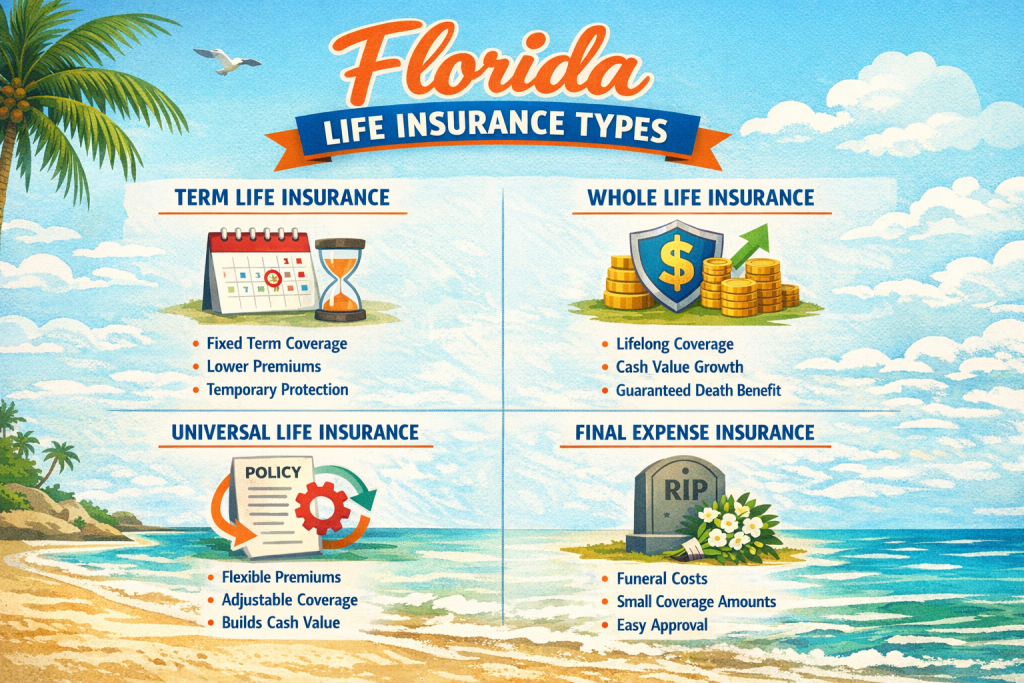
Understanding life insurance can feel overwhelming, especially for those living in Florida. With varying options available, it’s crucial to know the types that fit individual needs. This article will explore the different types of life insurance in Florida, focusing on whole and term life options, as well as key considerations for selecting the right plan.
Exploring Whole and Term Life Insurance Options in Florida
Whole life insurance provides lifelong coverage, ensuring peace of mind for policyholders. It offers a death benefit, which pays out to beneficiaries no matter when the policyholder passes. Additionally, whole life policies accumulate cash value over time. This cash value grows at a guaranteed rate, providing a savings component as well. Furthermore, policyholders may borrow against this cash value, adding flexibility and financial security.
On the other hand, term life insurance serves a specific period, typically ranging from 10 to 30 years. This option is often more affordable than whole life insurance, making it appealing for families on a budget. If the insured individual passes away during the term, beneficiaries receive the death benefit. However, once the term ends, the coverage expires without any cash value. Many people find term life insurance suitable for covering short-term financial responsibilities, like mortgages or children's education.
Both types of life insurance have distinct advantages and disadvantages. While whole life offers lifelong protection and a savings element, it generally comes with higher premiums. In contrast, term life allows individuals to secure substantial coverage for lower costs, yet without the cash value benefit. Understanding these differences will help individuals choose the best policy for their circumstances and financial goals.
Key Considerations for Choosing Life Insurance Plans in Florida
When selecting a life insurance plan in Florida, evaluating personal needs is essential. Individuals should determine how much coverage they require based on their financial obligations and future goals. For example, families with young children might prioritize policies that provide sufficient support in case of unforeseen events. Additionally, understanding the length of coverage needed will influence whether to choose whole or term life insurance.
Another crucial aspect is assessing the insurance provider's reputation and financial stability. Researching companies and reading customer reviews can reveal how well they handle claims. Furthermore, ensure the insurer has strong ratings from independent agencies. This step will help individuals feel confident that they are choosing a reliable provider.
Cost also plays a significant role in the decision-making process. Individuals should compare premiums from multiple companies to find the most competitive rates. However, affordability should not be the only concern; the policy's features and benefits are equally important. By taking the time to weigh all these factors, individuals can make informed decisions that best suit their needs.
Conclusion
In summary, understanding the types of life insurance available in Florida is crucial for making informed choices. Both whole and term life insurance offer distinct benefits, catering to different needs and financial situations. Evaluating personal circumstances, researching providers, and considering costs are essential steps in this process.